Why AI Still Needs Humans (and Always Will in the Near Term)
Modern AI sounds human because it learned from humans. But without fresh, real-world content and conversation, models plateau—and training on recycled AI output makes them worse.
Originally posted on YouTube on June 29, 2023Key takeaways
- AI outputs feel human because models learn from human-written text, not because they think like people.
- Models need fresh, high-quality human content to improve, and public data alone is a limited resource.
- Recycling AI-generated answers back into training or knowledge bases degrades quality over time.
A lot of the public conversation about AI starts with a fear: if models keep getting smarter, won’t they surpass people—and eventually replace them?
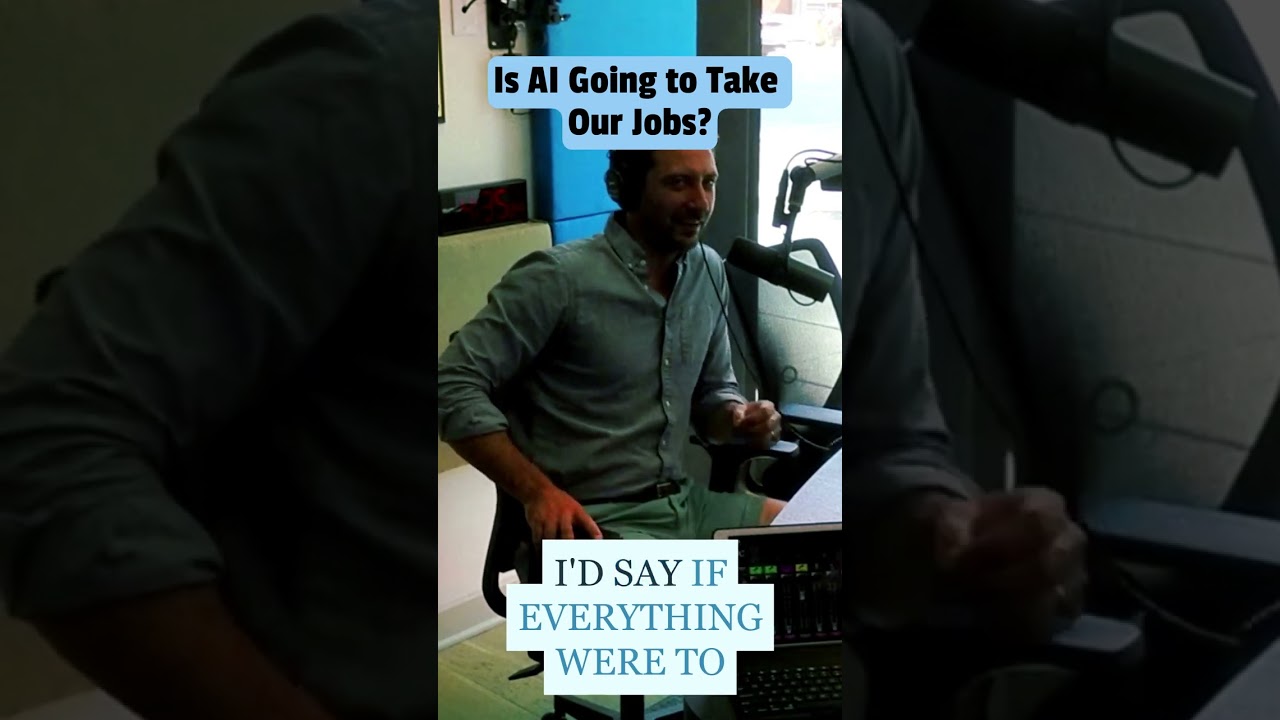
James Moelk puts it more plainly: the “smart” you’re seeing is built on human work, and it has real constraints.
Models sound human because they learned from humans
Large language models don’t spring into existence with opinions or understanding. They’re trained on massive amounts of text that people wrote: documentation, articles, forums, books, tickets, and other human language artifacts.
“First off, the AIs are trained on things that humans wrote.”
That training is what makes a model capable of generating fluent language and responding in a way that feels conversational. But fluent isn’t the same as thoughtful. The model is producing likely continuations of text based on patterns in the training data. That can be extremely useful in operations, support, and knowledge work—but it isn’t “human-like thought” happening under the hood.
This matters because it changes what “progress” looks like. If you assume the model is reasoning like a person, you expect it to keep improving as if it’s gaining experience. In reality, progress depends heavily on better data, better methods, and better integration with real systems.
The next bottleneck: high-quality new content
To get meaningfully better, models need ongoing access to high-quality information—and not just more of the same. In practice, organizations hit limits:
- Much of the best content is private (internal docs, tickets, incident reports, call notes).
- Public content has a ceiling; you can only ingest what exists.
- Quality varies, and low-quality material creates low-quality answers.
In other words, “more data” isn’t a strategy. Better curation, better retrieval, and better feedback loops are.
Why training on AI output degrades the result
One of the more practical warnings in the transcript is about feeding AI-generated content back into training pipelines. It sounds logical: if the model can generate answers, why not use those answers as more training material?
Because you’re not adding new truth. You’re adding reflections of the model’s own prior behavior.
“If we take AI generated content and we feed it back into the AI and train it with it… ‘digital poop.’”
That line is blunt, but it’s accurate. When you repeatedly train on synthetic outputs, errors and bland generalizations compound. Over time you can see a “step down” in response quality—less specificity, more hedging, more confident nonsense.
For operators and support leads, the parallel is straightforward: if your knowledge base is full of copied-and-pasted guesses, your agents get worse. The same thing happens to models.
The practical view: AI is a tool with constraints
AI will get better. But the idea of near-term “takeover” narratives ignores what actually drives improvements: new, human-generated content, better ingestion of existing sources, and technical advances.
In business terms, this is good news. It means your competitive advantage won’t come from waiting for a model to become magical. It will come from building disciplined knowledge workflows: capturing real resolutions, maintaining source-of-truth documentation, and creating feedback loops where humans correct and improve outputs.
What this means for you
If you want AI that’s useful in the real world, invest in the human side: strong documentation, clean data boundaries, and review processes that keep the system anchored to reality. AI can speed up work, but it still needs humans to produce—and validate—the content it runs on.